Discovering the Playground for the Mind — Inside Scrintal’s Product Development Process
You may have already read Ece Kural’s post, “Scrintal–building a playground for the mind.” If you haven’t, you should. It’s a great read!
Her article outlines the foundational pillars of our upcoming release — each doing their part of turning Scrintal into a true ‘playground for the mind’ where creativity and structure can coexist.
Fleetness: The importance of fluidity when you create. Lightweight creation of the pieces that make up your end product.
Interconnection: Understanding how things connect, helping you both present and make sense of complex topics.
Permanence & Reusability: The assurance that your ideas and essential work are secure, searchable, and reusable.
But where do these pillars come from? Are these ideas the end product of us trying to re-invent the digital whiteboard and word processor by thinking up one nifty feature after another?
The reality is more complex. This has been, and continues to be, a process. And like many creative processes, it’s anything but linear.
This is how we did it 👇
*1. Identifying Common User Needs* We used the Jobs to Be Done (JTBD) framework to delve deep into what our users aim to achieve with Scrintal. Relying on the experience of the founding team as well as the hundreds of hours of user interviews conducted over the last couple of years, we mapped out the use cases and workflows of entrepreneurs, managers, researchers, students and more.
We saw that, despite different backgrounds, many users share similar workflows. The path is often iterative and non-linear, and involve continuous refinement and late-stage changes.
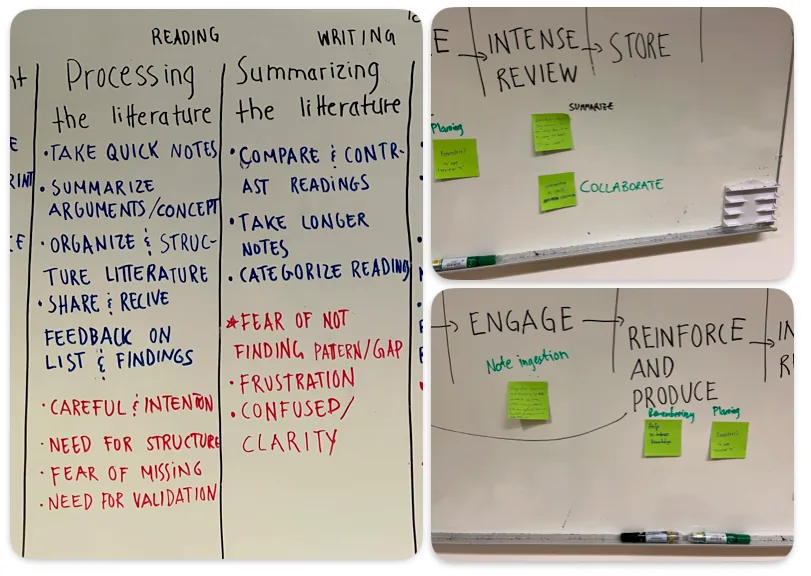
While the end-product might be very different, many creative and analytical use cases have similar needs.
*2. Iterative Ideation, Validation, and Development* We adopted an iterative process to refine our ideas and features continually.
Early Testing: Sharing simple, often hand-drawn concepts with users at the earliest stages.
Continuous Feedback: Collecting and analysing feedback to understand user expectations and pain points better.
Rapid Iteration: Repeating this cycle multiple times, progressively enhancing our product based on real user insights.
We use this approach to ensure that with each iteration, we move closer to meeting the needs of our core users.

In hindsight, a creative process may seem like a straight line, but the reality is full of twists, turns and dead ends. The journey is rarely linear, but it’s what leads to true innovation.
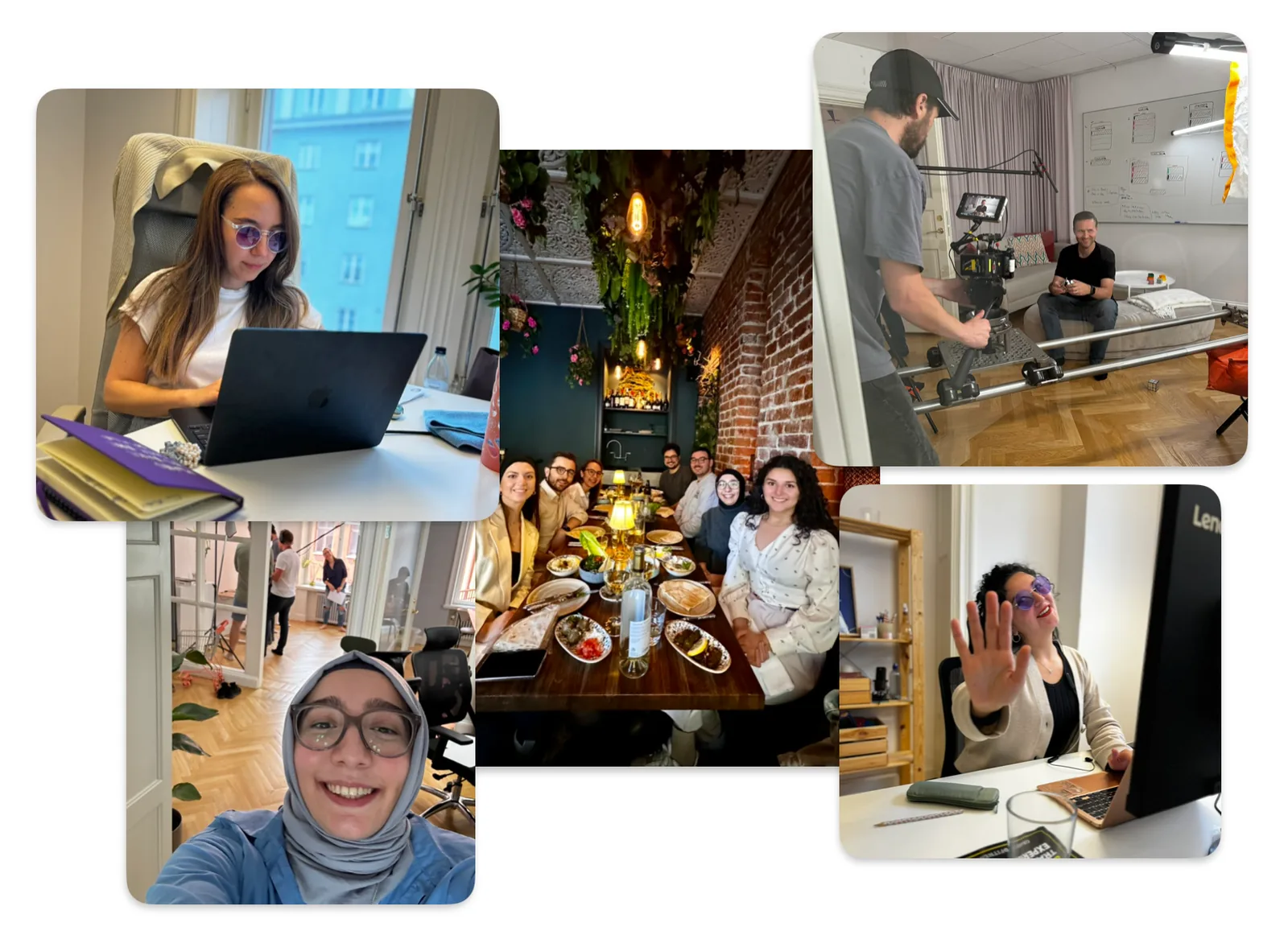
*3. Using Scrintal ourselves* At our core, we are a company with a passion for building products that amplify creativity and make thinking fun. In doing so, we use Scrintal. In fact, not a day goes by without Scrintal being a key tool in our work.
Being users of our own product gives us a unique perspective. By living the product we create, we ensure that Scrintal remains a true playground for the mind — both for us and for everyone who uses it.
What’s next?
We do onboarding sessions every week!
Join our community to closely watch the updates until our launch.
Follow our updates on X